Thursday, May 9, 2013

EM's BoP Nightmares

As the world slows down and the lack of growth in Global Trade remains... idling productive capacity that needs to be paid off...

Now consider how much FX reserves non-DM guys have and what most of their growth models are based on.... and then match that with very loose monetary policies in the US, Eurozone, Japan.. and lack of global inflation to keep cash flows stable in order to pay all the global debt pile.

Here is the nightmare of Chinas, Brazils, Koreas, Taiwans, Mexicos, etc... basically mercantilists, exporters.

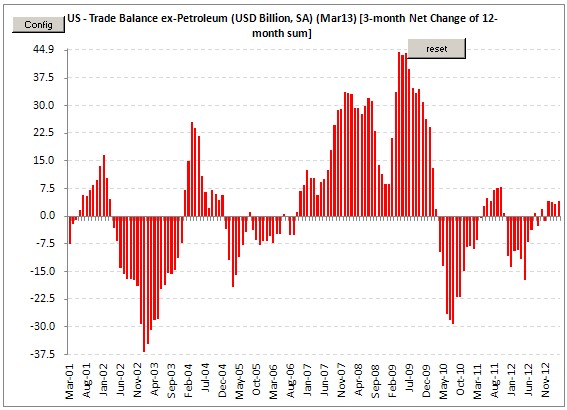
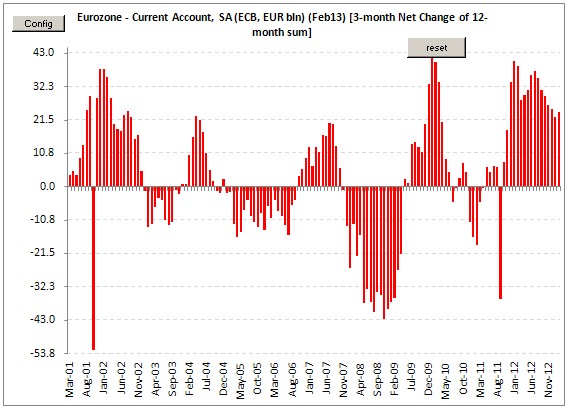
The depreciation of the Yen and the improving current account in the US and Europe is just starting to hit non-DM Balance of Payments, etc.

Now add that a lot of their corporations have recently issued debt in USD, as an example, as yields were lower than homeland's.

Who will consume?

Payback time.

US: quarterly figures for the Current Account / monthly figures for Trade Balance
1995 = USD strong / JPY weak = start of deterioration in East Asian exports and we know 1997.
Now.....???

Eurozone: monthly figures for Current Account.


*Disclaimer: charts and data are presented as I receive/see them. Sources are usually not checked for validation and my own calculations are of 'back of the envelope'-type. I am aware that some math that I do myself might be wrong and/or misleading to some extent. In financial markets the rate of change of economic data is often more important than the actual level and the perception of 'what is priced in' is more important than 'what is actually going to happen'. This is actually the way people pick entry and exit points. So... yes, sometimes you might say 'This guy is an idiot, this is way wrong!' with a high conviction, being right. Not to worry. Markets are made of expectations and the clash of conviction between its participants. Portfolio managers know that being an idiot is sometimes profitable and being smart is often a bad choice. It is all reality, sometimes good, sometimes bad. By the way: corrections to my analysis and intelligent debate is welcome. theintriguedtrader AT gmail do com

Wednesday, May 1, 2013

US: FC versus LT = Will QE Win?

Fiscal Contraction x Liquidity Trap = Will QE Win?


So months ago I spent some time coming up with a fantastic theory, based on readings of Crazy Krugman and Mad Koo. Basically they're the guys who love the fiscal impulse and have studied the almighty Balance Sheet Recessions, Liquidity Traps and Deleveraging What-Nots.

The broad thesis, without going into detail again, was that the US was to follow, to some degree, the paths of Europe and the UK: even though monetary easing was going on, fiscal austerity was the real magic bullet that killed growth while the private sector reduce leverage.

The US was just, through the end of 2012 and beginning of 2013, accelerating its marginal fiscal contraction and therefore would repeat the recent economic performance of EZ and UK.

The main difference, I think, is that since the US had spent more time under severe fiscal stimulus, giving its private sector more time to delever, through grand QE programs, then the economic underperformance might not be so large. We'll see.

Below I'll present some interesting charts and perhaps discuss a little. It is a holiday and I should be out doing something, perhaps at a bar here in Rio.

This is basically a chart stating that despite the fabulous strength of the S&P500 index, usually used as a leading indicator to growth, its Net Income, in USD terms, has been trending down for some time now.


Now for the Russell 2000 Small Caps, which is a large group of smaller companies that shouldn't have the same economy of scale as large and mega caps, etc, the picture is about the same:

So important drivers of growth in the US right now are 1/ Housing and 2/ Autos. Here's from the latest Consumer Confidence report which was actually very good. Basically Home Buying Intentions are stable, while Auto Buying Intentions have been trending lower.


Here is the NAHB (Home Builders Association) Indexes too and MBA Purchase Index. These are the generators of jobs in Construction. I don't know how a slowdown in Prospective Buers lower works with Future Sales, but... we'll see.


MBA Weekly Purchase Index (3 month change of 3-week moving average and raw weekly number):


And now the just released Total and Domestic Vehicle Sales #s:
// Total = lowest in 6 months.
// Domestic = same


I've read that Small Business actually do the heavy lifting in recovering jobs. If you count on the NFIB Hiring Plans and Outlook for General Business Conditions.... doesn't look too good. Back to multi-year lows.


Retail Sales:

Redbook Same Store Sales, 52-week change of 3-week moving average:


Manufacturing Production (not using Industrial Production due to the disparity in March of it due to Utilities, shown below, spike during a very, very cold month of March x average):


Considering the US went through one of the coldest months of March in history, bringing electricity generation upwards due to heating demand, here is what we have now for Electricity Generation... which also uses a lot of Heating Oil (distillates):


Now this is Crude Products Consumption (DOE data) ex-Distillates and considering Distillates and only Motor Gasoline:


On the Employment front... decelerating Non Farm Payrolls:

Household Survey:


And a very low Diffusion Index, showing that the number of sectors hiring is decreasing:

And recent spike in Average Duration of Unemployment:


Core Capital Goods Orders and Shipments:


Some what people call Leading Indicators:


Some good stuff or random stuff or bad stuff now.

Architecture Billing Index:


Railroad Carloads ex-Coal (due to weather impacting it) and ex-Grains (depends on harvest). Idea here is get manufacturing/overall consumer goods or capital goods shipment:


ATA Truck Tonnage:

Long Beach + Los Angeles Inbound Containers, YoY 3mo mov avg:


ICSC Chain-Store Sales, weekly looks good (despite the 52-week net-change of weekly moving average) is still decelerating)


I'm tired. I'm outta here.


*Disclaimer: charts and data are presented as I receive/see them. Sources are usually not checked for validation and my own calculations are of 'back of the envelope'-type. I am aware that some math that I do myself might be wrong and/or misleading to some extent. In financial markets the rate of change of economic data is often more important than the actual level and the perception of 'what is priced in' is more important than 'what is actually going to happen'. This is actually the way people pick entry and exit points. So... yes, sometimes you might say 'This guy is an idiot, this is way wrong!' with a high conviction, being right. Not to worry. Markets are made of expectations and the clash of conviction between its participants. Portfolio managers know that being an idiot is sometimes profitable and being smart is often a bad choice. It is all reality, sometimes good, sometimes bad. By the way: corrections to my analysis and intelligent debate is welcome. theintriguedtrader AT gmail do com

Monday, April 8, 2013

Interview with Druckenmiller on BBG (March 1st)

I just think this guy, alongside others like Soros, Rogers, Kovner and Tudor Jones, who had their asses on the line, is fantastic.He has lived through history. Has learned with the past and, well.. I hope I was good as he was/is/likely will be until he stops managing money.

I once read notes from his appearance on Grant's Conference and he said something that I'll keep within my mind's reach.
It basically read like this:
Secular bear markets end when a secular problem is solved. In the 70s we had inflation. It was choked off by Volcker, by doing the HARD thing which was, at the time, raising short-term interest rates to very high levels. "Welcome to the real world". That, of course, killed bonds and also equities. Why? Only the best survived the environment. Marginal projects died. Bad investments turned sour. But gave way to true capitalists and entrepreneurs that were competing with 18-20% short-term "risk-fre" bonds to fund their ideas, projects. The US government had that high a cost to pursue their plans, etc.

That spoke about the US. 

Today things are much more dramatic and serious as the secular problem we have in our hands is global, of incomprehensible proportions. The way out is so tough for everybody that people just can't think it can happen. The global debt pile is the malaise and for it to be solved, either through high inflation or through catastrophic debt-deflation (default, restructuring), we'll have to endure PAIN. We will feel it. I am very confident about this. Unfortunately I'm not sure when it'll start and how it'll end, but I am aware that it'll be very, very tough for everybody.  


Anyway... 


<Show: BLOOMBERG TV>
<Date: March 1, 2013>
<Time: 10:00:00>
<Tran: 030169cb.550>
<Type: SHOW>
<Head: Duquesne Capital Founder Stan Druckenmiller on Bloomberg TV>
<Sect: News; Domestic>
<Byline: Stephanie Ruhle>
<Guest: Stan Druckenmiller>
<High: Duquesne Capital Management Founder Stan Druckenmiller talks to Bloomberg TV about his outlook for the U.S. economy>
<Spec: Economy; Spending; Markets>

DUQUESNE CAPITAL FOUNDER STAN DRUCKENMILLER ON BLOOMBERG TV

MARCH 1, 2013

SPEAKERS: STAN DRUCKENMILLER, FOUNDER, DUQUESNE CAPITAL

STEPHANIE RUHLE, BLOOMBERG NEWS

(This is not a legal transcript. Bloomberg LP cannot guarantee its
accuracy.)

STAN DRUCKENMILLER, FOUNDER, DUQUESNE CAPITAL
MANAGEMENT LLC: I started this journey back in `94, but as I
think a lot of people know, I've been in the investment
business for over 30 years. What I do is I look at economies
and markets, try and see where they're going. If I'm right I
make some money, and if I'm wrong I lose some money. Every
once in a while the world of investing and what's going on in
the country will intersect.

So in `94, I sort of came out of hiding. I was working
for George Soros. So I was having dinner with John Kasich and
a couple market people, and John Kasich, who's now the
governor of Ohio, was in Congress. And somehow the subject of
what would happen if we defaulted on our debt, what would
happen to the bond market. And we're not talking about the US
going under. We're talking about missing a couple payments to
get big entitlement reform or something like that.

And fortunately or unfortunately, I said, well, I think
the bond market would go up. And he was just stunned because
Secretary Rubin and some other people were telling him the
bond market would go down and it would stay down for 30 or 40
years. So all the sudden I found myself right in the middle
of this whole budget fight down in Washington. I kind of made
a mess of the whole experience, and in `96 decided I should
manage money, keep my mouth shut, try and do well for my
investors and stay out of the public eye.

Flash forward to 2004, late 2004, early 2005. As part of
what I do, just like I was looking at demographics back then
for now, I saw a big storm coming, which was basically I had
seen a table of subprime. So I almost came out of wherever I
was hiding again, but decided instead to meet with a couple
policymakers and a congressman. Had my 30 charts with colors
and pictures and laid out for them why I thought this was
going to be a huge, huge problem for the US economy and the
US financial system.

Apparently they didn't agree me because nothing was ever
done, but I've sort of always regretted that I didn't go
public like I did in `94 with the housing thing. Currently,
Stephanie, I see a storm coming, maybe bigger than the storm
we had in 2008 to 2010. And really the reason it could happen
without people looking is for a lot of - a lot of similar
reasons that we could get into. But - but the basic - the
basic story is the demographic bubble I was looking at way
back in `94 that started in 2011, we are right at the first
ramp up of this thing.

Something remarkable has occurred since 1994 until now,
which is entitlement spending - or let me say transfer
payments to be a little more correct - transfer payments,
which were 28 percent in `60 and were 50 percent when we were
in the budget mess in `94, lo and behold they've gone up to
67 percent of government outlays. But they haven't gone up
because of demographics. They've gone up because the seniors
have a very, very powerful lobby. They keep getting more and
more transfer payments from - from the youth, but the
demographic storm is just starting now.

In some ways it reminds me of `05 when people just
extrapolated housing prices going up for 50 years. Everyone
sort of lives with their rules in the past and doesn't look
at coming changes. So what's going to happen is we now have a
working population - this is the way entitlements work -
where the current workforce is paying for the benefits of the
seniors. Since 2000, we've had about 4.5 to 4.8 workers for
every retirees. By 2050 (ph), that number will drop to 2.4
workers per retirees. Another catchy way to say it is by
2030, the average population of the United States is going to
be older than the average Floridian right now.

STEPHANIE RUHLE, HOST, BLOOMBERG NEWS: You could say at
a dinner party, look what senior citizens are doing, stealing
from the next generation. Who is going to be the group of
people that stop this?

DRUCKENMILLER: Okay. You asked me why I'm here. And I
think people like me and others need to speak out. It's about
the future, not about the present where the problem is. And
let me just say one thing. I am not against seniors, okay? I
love seniors. Unfortunately, I'm going to be one in the not
too distant future. What I am against is current seniors to
me stealing from future seniors.

Well, you can ignore it until you can't. If you go back
to Greece, February of 2010, they had the German credibility
umbrella above them. Everything was fine. Two to three weeks
later, it was a disaster. If you go back to 2006 here,
housing prices have gone up for 50 years. Everything's fine.
Markets, they tend to care until they don't. And I'm not
about to tell you when this is going to care. I can tell you
right now that my 2005 thesis cost me a lot of money in 2006.
We were up, but we had one of the more mediocre years in the
history of Duquesne because I saw this big storm coming and
my timing was off.

And I can tell you right now that I don't know, again,
if we don't act, I don't know what the timing of when the
markets will respond to this, but it will happen. I don't
know whether it's going to happen in one month, one year,
five years. It could be as long as 10 years, but it will
happen because fundamentals are fundamentals.

RUHLE: Well then is the investment community going to be
to blame for hurting the economy or societal problems?

DRUCKENMILLER: It's hard to tell who's going to be
blamed if we don't act and this occurs.

RUHLE: Who should be blamed?

DRUCKENMILLER: Well, there's plenty of blame to go
around. If I had to analyze how did we get into the financial
crisis, I would say it started way back in the `90s when then
Chairman Greenspan refused to address the dot-com bubble,
came up with some new theory of productivity and therefore
we're not going to have a problem. So all these NASDAQ
companies that were never going to earn money went to
hundreds of times earnings, and then of course we had a major
bust. And instead of taking a recession and having the clean
up, they needed an offset, so they created the housing
bubble.

So now by hindsight, everybody says well, you had these
horrible Wall Street actors. And I'm sure there were quite a
few horrible Wall Street actors, and I don't doubt that they
were part of the - part of the problem. In fact, I know they
were part of the problem. But I also know it was negative
real interest rates for 12 out of 20 years that enabled these
factors to do the things they were doing and incented - yes,
incented them to go out and gamble the way they were
gambling.

One of the things that is kind of one of my pet peeves
is hearing all these people on TV say, well, you've got to go
into equities because they're so cheap relative to bonds and
there's no other game in town. They are cheap relative to
bonds, but everything is cheap relative to bonds. So just
because equities are cheap relative to bonds doesn't mean
their price isn't subsidized. And I'm not making a forecast
here because the subsidization could go on for a long time,
but real estate, gold, equities, they're all priced off of
zero interest rates and they're all subsidized.

RUHLE: But are equities so cheap when the deal of the
week is this Warren Buffett Heinz deal, which is really a
bond deal?

DRUCKENMILLER: Well again, this party can go on, so
don't take this the wrong way, but I don't believe equities
are cheap. And I don't believe equities are cheap for a
different reason. Again, I don't like to look at the current
and the past. I like to look at the future. So if you look at
the demand in the current economy, it's unsustainable. We
have a 9 percent deficit-to-GDP. We have this debt I'm
talking about. So demand is going to be lowered one way or
the other. So if you normalize margins and you normalized
demand, equities don't look so cheap. Now they're cheap
relative to bonds. The S&P yields more than the 10-year, so
pick your poison.

RUHLE: Do you have a fear that fundamentally the
investment community might agree with you that overall we
face major problems, but unless they're long the market
they're making a huge mistake and their investors are going
to pull their money out?

DRUCKENMILLER: I don't know whether it's investors. I
like a good party too, and I've been long the market when I
was thought it was overvalued if I thought it might go on for
a while. A lot of those times have been profitable, and one
that's well documented in the spring of 2000 wasn't so
profitable. But I do think investors right now think equities
are the only game in town. They are. There will be a day when
what they're measuring themselves against will make them not
the only game in town. When that will happen I'm not sure,
but it will happen.

If you look at Japan, they've had a deflation now for
the better part of 15 years and they've had a market problem
now for 23 years. I think they are dead serious about
attacking the epicenter of the problem, which is deflation.
And they're talking in ways and they seem committed in ways
I've never seen before, at least in the last 10 or 15 years,
in Japan. So to answer your question, I think they are very
serious about deflation. I think they're going to take a real
run at it. I think their market will respond for a while and
then we'll see what happens.

RUHLE: So if you had to rate policymaking today, would
you say Japan's doing it right, Europe's doing okay and US is
doing it the worst?

DRUCKENMILLER: I would say Japan's just doing what
everybody else has been doing for 15 years. But I would say
that it's more appropriate in Japan given their situation.
They haven't had imagined or take or potential deflation.
Their price level is lower than it was 15 years ago. I don't
think the policy is extreme in Japan relative to their
circumstances. I've needed - I think it's needed. But to say
who has the best policy, we're all doing the same thing now.
Other than Brazil, every single central bank in the world is
engaging in highly-stimulative monetary policy.

RUHLE: Everybody loves to talk about currency wars. Some
people say it's a joke, we've actually been in one since
2010. Do you think we're in a currency war or this is just
policymaking colliding?

DRUCKENMILLER: We're not in a currency war. We're in -
we're in a stimulation war. I would say to a large degree we
started all this, and we started it with less bad
circumstances than some of the others have responded. But you
asked me about Japan earlier. I am a little bit amazed that
all this currency war stuff has been erupting with -
surrounding the Japanese. And I only say that because the
Japanese have been in deflation, not fake deflation, real
deflation, prices have been going down there for 15 years.
They have a record trade deficit, okay? Some of the people
that are voicing big opposition to them, such as the Koreans,
have a record surplus and they intervene in their currency
constantly.

So if you look at the Bank of England, which has a
reasonably high inflation rate and which is doing the same
thing, I don't quite understand why the Japanese situation
has triggered all this angst in the other capitols. But no, I
don't think we're in a currency war. I think we're all doing
the same thing now, with the exception of Brazil. And for all
we know they'll be doing it shortly too, but every single
major country now is running stimulative monetary policies
basically modeled after the Fed.

I'm pretty frustrated. This sequester thing, if you just
look at how it came about, first of all there's - every five
minutes all this suffering and all this horrible stuff is
going to happen in various sectors if this goes through, but
there's three things that are not on the table in the
sequester. I know you're going to be shocked by this.
Medicare, Social Security and Medicaid, okay?

RUHLE: Why is that?

DRUCKENMILLER: I'm sure it's because of short-term
politics. The problem with politicians is they really only do
have a four-year lifecycle. The rest of us should have the
responsibility to look a little further than that ahead. But
yeah, I don't know whether mad is the word. I'm extremely
frustrated by - by their refusal to deal with this problem.
And the sequester thing, I think the president made a deal.
It was a deal so they would extend the debt ceiling, which
they did, all right?

I am very much for tax reform, but I don't think it
should be part of this particular thing and we should be
parading out the crowd we've been parading about to say how
horrible this is going to affect the economy. Let me tell
you. I don't know what the economy's going to do, but it's
just a little ridiculous to say a $600 billion tax increase
over 10 years and $150 billion increase in the payroll tax is
going to have no effect on the economy, but an $85 billion
cut in - in - in discretionary spending is going to take the
economy? If the economy were to often, I can tell you it will
not be because of this $85 billion.

RUHLE: We've got to talk about tax policy. Do you think
has - enough has been done to address current taxes in the
United States?

DRUCKENMILLER: No. I think the United States is in
major, major need of major tax reform. I would take the
corporate tax rate to zero, zero, but I would fully tax
dividends and capital gains at the normal rates. So they
wouldn't be taxed twice. Corporations would stop figuring out
ways to build plants in Ireland or the Cayman Islands or
wherever they're going or having fancy lawyers to figure out
lease-back arrangements, and you know what they'd do? They
would just try and make money.

So the zero rate there - by the way, a lot of these
corporations are already paying zero. And they're - they're
in some sense stealing from the guys that are paying 30 and
35 percent. And then there's things like this private equity
carried interest. Are you kidding me? What a joke. Current
income is current income. That thing should have gone away
years ago. Why hasn't it? I think we both know the answer.

RUHLE: Why don't you go to Washington? Not to visit, why
don't you become a policymaker?

DRUCKENMILLER: Because my wife loves New York and I love
my wife.

RUHLE: Would you ever consider it?

DRUCKENMILLER: No.

You've got to do your own work. You've got to look at
history and see where things are. And most importantly,
you've got to think in an open- minded fashion and look - you
have to visualize 12 to 18 months how things might look, not
where they are today or where they've been - what the
trajectory has been today. You have to sit down and say what
is this company going to look like in 12 to 18 months.

Since it's down a lot, we could just use Apple as an
example. Instead of frothing at the mouth and saying
everything they were saying when it was $700, maybe they
should have thought about the fact that the margins were
where they were and Samsung's margins were where they were,
and got a Galaxy from somewhere and just looked at that phone
and looked at the history of hardware company's margins can
be over the long term.

Now since the stock's way down from $700 - I'm not
opining on it now - but there's a case of people, again, just
using a rule and looking at the past or the present and not
visualizing the future. So if I had one - one piece of advice
to give to your viewers, try and imagine the world 18 to 24
months from now, not the way it is today, and then think
about where security prices should be to reflect that view.

RUHLE: Because so many hedge funds aren't investing that
way, they're investing today, they're trying to please their
investors today, they want to raise money today, do you think
12 to 18 to 24 months from now they could be in hot water and
the hedge fund industry could be even further consolidated?

DRUCKENMILLER: I don't know. I think the hedge funds
short-term thinking is just a manifestation of our entire
society. Whether it's the Fed or whether it's the
administration or whether it's Congress, no one bothers to
think about the long term anymore. And the hedge funds are
just one more manifestation of that.

That's hard for me to answer because I have the luxury
of a lot of experience in sitting in front of a screen, and I
can go into currency markets (inaudible) relative price, so
it's the one area where prices aren't subsidies - subsidized
- and I'm arrogant enough to think I can time these things.
But I don't really know how to answer that question for
public investment.

Let me - let me just say that this idea that you've got
to go plowing into risk assets because rates are zero, that -
they will rue the day. One day the music will stop. And I
would probably be invested right now thinking I'm smart
enough to know that we're quite away from the music stopping.
I don't think Bernanke is about to end these policies for a
while. But let's just know what we're dealing with here, and
clearly I carry professional experience and your normal
individual doesn't.

RUHLE: If you were starting today, would you say hold
off and wait 18 months?

DRUCKENMILLER: Me - if I was starting as a professional
investor today? No, I'd probably be playing the same game
everybody else is. I'd probably make money for a while and
then I'd probably get burned and start all over again.

That's a complicated question because we're all
outraged, but the consequences had those big banks failed - I
think Geithner did a great job with that stuff. I really do.

RUHLE: You have these big banks that are now doing
business where they look more like utilities. Do you think, I
don't know how these guys are going to make a ton of money
going forward? Maybe there does need to be more
consolidation.

DRUCKENMILLER: I'd like to see them be more like
utilities. I could care less whether they make money, unless
I owned the equities. But if we're talking about as a United
States citizen, I have no problem with banks being utilities
and going back to what banks used to do.

RUHLE: Banks are about human capital. They don't - they
don't make TV sets. They don't innovate products. They need
to have the smartest, most sophisticated people in the
building in those seats.

DRUCKENMILLER: Not if they're just making loans.

RUHLE: And that's what they should just be doing?

DRUCKENMILLER: Yeah.

RUHLE: And the most sophisticated guys should work at
hedge funds, not on sell-side trading desks?

DRUCKENMILLER: You said it, Stephanie, not me.

I think solvency is being addressed in certain
countries, Spain, some other countries like that. But no, the
- the big difference is once Draghi said those famous words,
they're going to do whatever it takes, people felt better.
And there's - there's a - there's an umbrella under the
market in investor's minds right now. Can they pull out of
this? It'll be difficult, but we'll see.

RUHLE: Can central banks just keep printing money
because there's no one to foreclose on them?

DRUCKENMILLER: Not forever, but maybe for a lot longer
than we think.

RUHLE: And if they do, then what's going to be the
downside?

DRUCKENMILLER: The longer you keep the thing going, the
worse it is. I'm probably going to disappear again at some
point, but in the mean time I'm going to do what I can to try
and bring the awareness of this issue out. Because with
respected economists, again, focusing on a little problem
over here when you've got this big problem over here, I think
the message needs to be out there.

But one area I'd love to focus on, if they'll have me,
and I know I'm going to give a talk at some point at my alma
mater, Bowdoin College, is to talk to the young people.
Because I don't think they would be electing leaders who say
they don't want to balance the budget on the back of seniors
if they knew what was going on out there. And so I'd like to
some extent,try and communicate with young people, whether
that is going to college campuses or using some other medium
to get to them.

RUHLE: Does that mean you're going to start tweeting?

DRUCKENMILLER: No tweeting for me.

RUHLE: So if I'm a college student today, I'm at Bowdoin
College, maybe I don't know who Stan Druckenmilller. Maybe I
don't know what your investing history is. Why should I
listen to you as far as what the US economy should look like?

DRUCKENMILLER: I've had my money on the line for a long,
long time trying to forecast future events, and I think feel
strongly enough about this event that you just get them
there, I think my record will speak for itself. I'll probably
have to do a little bragging about some past experiences just
to establish the credibility to get them to listen. But I - I
have a lot of faith in our young people.

***END OF TRANSCRIPT***

THIS TRANSCRIPT MAY NOT BE 100% ACCURATE AND MAY CONTAIN
MISSPELLINGS AND OTHER INACCURACIES. THIS TRANSCRIPT IS
PROVIDED "AS IS," WITHOUT EXPRESS OR IMPLIED WARRANTIES OF
ANY KIND. BLOOMBERG RETAINS ALL RIGHTS TO THIS TRANSCRIPT AND
PROVIDES IT SOLELY FOR YOUR PERSONAL, NON-COMMERCIAL USE.
BLOOMBERG, ITS SUPPLIERS AND THIRD-PARTY AGENTS SHALL HAVE NO
LIABILITY FOR ERRORS IN THIS TRANSCRIPT OR FOR LOST PROFITS,
LOSSES OR DIRECT, INDIRECT, INCIDENTAL, CONSEQUENTIAL,
SPECIAL OR PUNITIVE DAMAGES IN CONNECTION WITH THE
FURNISHING, PERFORMANCE, OR USE OF SUCH TRANSCRIPT. NEITHER
THE INFORMATION NOR ANY OPINION EXPRESSED IN THIS TRANSCRIPT
CONSTITUTES A SOLICITATION OF THE PURCHASE OR SALE OF
SECURITIES OR COMMODITIES. ANY OPINION EXPRESSED IN THE
TRANSCRIPT DOES NOT NECESSARILY REFLECT THE VIEWS OF
BLOOMBERG LP.

(Copy: Content and programming copyright 2013 BLOOMBERG,
LP. ALL RIGHTS RESERVED. Copyright 2013 CQ-Roll Call, Inc.)


*Disclaimer: charts and data are presented as I receive/see them. Sources are usually not checked for validation and my own calculations are of 'back of the envelope'-type. I am aware that some math that I do myself might be wrong and/or misleading to some extent. In financial markets the rate of change of economic data is often more important than the actual level and the perception of 'what is priced in' is more important than 'what is actually going to happen'. This is actually the way people pick entry and exit points. So... yes, sometimes you might say 'This guy is an idiot, this is way wrong!' with a high conviction, being right. Not to worry. Markets are made of expectations and the clash of conviction between its participants. Portfolio managers know that being an idiot is sometimes profitable and being smart is often a bad choice. It is all reality, sometimes good, sometimes bad. By the way: corrections to my analysis and intelligent debate is welcome. theintriguedtrader AT gmail do com

Thursday, March 28, 2013

Mexican Trade and USD Debt - A Few Charts

Tomorrow is a holiday, so why not spend time looking through charts around 9pm?

I've been intrigued by global trade not recouping losses or just stabilizing, with little growth.

I'll just leave these charts on the Mexican February trade numbers. I am not analyzing the details either.

But I will say that I don't know where all those Chinese Exports went in Jan-Feb, because no other country I looked, that could be big enough to cause such a massive shift in Chinese Exports, showed any massive growth.

Now look at the USD against many currencies, from countries with beautiful Balance of Payments, especially those with positive current accounts helped by Net-Exports.
List who these are.
And tell me EM is not slowing down materially.
Now tell me what happens to balance sheets of countries/companies that issue in USD when the US Dollar goes up...

Oh.. cool.


EXPORTS


IMPORTS


*Disclaimer: charts and data are presented as I receive/see them. Sources are usually not checked for validation and my own calculations are of 'back of the envelope'-type. I am aware that some math that I do myself might be wrong and/or misleading to some extent. In financial markets the rate of change of economic data is often more important than the actual level and the perception of 'what is priced in' is more important than 'what is actually going to happen'. This is actually the way people pick entry and exit points. So... yes, sometimes you might say 'This guy is an idiot, this is way wrong!' with a high conviction, being right. Not to worry. Markets are made of expectations and the clash of conviction between its participants. Portfolio managers know that being an idiot is sometimes profitable and being smart is often a bad choice. It is all reality, sometimes good, sometimes bad. By the way: corrections to my analysis and intelligent debate is welcome. theintriguedtrader AT gmail do com

Wednesday, March 13, 2013

Financial Repression: profits today AND tomorrow? [David Zervos]


My 2cents on a piece by Jefferies' David Zervos I received today.
Maybe I understood his words wrongly. Maybe I am biased.

*** PIECE AT END ***

Zervos has been spot-on regarding risk-on and playing the Bernanke-Put. No doubt about that.

And I accept/agree with most topics touched below.

One thing that gets me to scratch-head is that markets are indeed pricing in "higher real risk-free rates of return", but not because the animal spirits are going to get people into investing, or into believing in growth-escape-velocity and subsequent decrease in debt/GDP (in US it's been +45% debt for +11% GDP growth I think, speaking of 'debt-deleveraging...) producing, then, higher nominal cash flows. We're currently borrowing from future growth as proven by the decreasing marginal utility of debt (transformed into growth).

So...

A/ As market-prices rise for financial and hard assets with a
1/// stable stream of Cash Flow (equities, bonds [sovvies or corporate]) and
2/// a discount factor (time + real-yields), you're actually reducing the scope for higher REAL returns. That's simple arithmetic.

B/ risk-free Bond Yields can't move higher... and here is where I think Zervos is wrong.
Ask around what everyone would do, at least temporarily before proven otherwise, if a Bloomberg HOT headline printed "the Fed, the ECB, the BoJ and the BOE decide to end their monetary stimuli".
I am pretty confident that everyone would get the hell out of pretty much most assets they've been holding onto.
And that could make financial asset prices to go lower, likely much lower, and cause... debt-deflation.

With inflation expectations becoming increasingly negative you can, then, be long "risk-free government bonds", and actually have a "higher risk-free real return". Welcome to deflation (like in 2009).


So the conclusion could be that, financial repression pushed people into risky-assets because they have no alternatives. Herd behavior, scarcity of good assets.
While QEs remain in place and until nominal growth disappears, keeping nominal cash flows positive and stable, people will remain long carry, chasing yields.


Here are 2 charts I keep in a drawer nearby to remind me that whatever doesn't have positive carry (read commodities, Ibovespa x CDI are examples) shouldn't be bought, but sold on rallies.

Then you drill down to what are the best risk-adjusted carries in the world.. and the answer is "what has stable, preferably rising, carry and denominated in the currencies that have ongoing powerful QE programs, but with a currency hedge, if hedging has very low carry against it to your desirable currency.

That gets you to:
// USD: US Equities, Treasuries, Corp bonds
// EUR: German is the risk-free here, so German equities and Bonds
// GBP: same…
// JPY: now, after finally reverting the currency-appreciation due to the enormous stock of assets in foreign currency (said to be 55% of GDP) flooding Japan after each shock, so that pension and insurance companies could cover their deficits without selling JGBs, the Nikkei and JGBs are making new highs…
// CHF: the Swiss Market Index and swiss sovvies.

These all posted new near-term and close to all-time or multiple-year highs in local currency.


While the rest of EM/Commodities start taking a tumble starting in 2010/2011/2012, saturated by foreign capital that made real estate prices higher, inflation higher, but now with much higher currencies in real effective terms (terms of trade…) and unable to keep expanding at the rate it did in the past 10-15-20 years now, so multiples used for equities for example, can't be as high either. The SuperCycle, in my opinion, has ended. Time to get some of that BoP surplus back to where it came from.

Charts:
The first chart is from Bridgewater. Basically the component break-down of Global Equity Returns into a/ growth in cash flows and b/ the reduction in the discount factor of these cash flows. Basically real-yields dropped, causing the net-present-value of these no-growth-cash-flows to soar.


The second chart is from Kyle Bass’s Hayman letter. It shows the marginal utility of debt through time, since the end of WWI.


I might be wrong. But for now this is how I view things.
Thoughts are welcome.

--------------------------------------------------------------------------------------------------
David Zervos - Risky real rates vs risk free real rates
 Ok, I am going to be a bit of a geek today. So no Breaking Bad, Colonel Jessup or Charlie Sheen references. Sorry to disappoint but there are some serious changes under way in market correlation patterns. And these need to be addressed.
 Specifically, the USD is strengthening sharply as seen in the near 4 big figure move in DXY over the last 6 weeks. The last time we saw a dollar move like this was in late spring/early summer of 2012. Back then, spoos dropped 10 percent and the entire global risk asset complex was rinsed. As was typical in post crisis markets, European problems were to blame for this flight to the dollar and away from risk. It was the Greek election and Spanish banks that had everyone corybantic at that time. But just like in all other "flare-ups", Ben and Janet rode to the rescue dragging the ECB along for the ride. 
 I remember writing some fun commentaries at that time  - "Black Swan Down - Viva La Espana", "Germany Loses, Spoos Win", "The Committee to Save the World - Part Deux", "A New Euro/Spoo Correlation Coming"....etc etc. Those surely were good times - there is really nothing more enjoyable for me than writing a solid BTD commentary as markets swoon. Anyway, as the central bank policy measures kicked in and the pressure from Europe dissipated, the DXY dropped and risk assets gained traction. That was the  boiler plate post 2008/2009 crisis market correlation pattern! 
 But as we fast forward to the current situation, EURUSD is dropping towards 1.30, USDJPY is pushing through 96 and the dollar is even beating up on CAD and AUD. At the same time we are printing record highs in the Dow, while Gold is weak and many of the once venerable developing markets (ie BRICs) are struggling. What explains this NEW pattern in global markets? Strong dollar/ strong risk-assets/weak gold/weak EM is not something that associates well with our post-crisis world - in good times or in bad times. Its a pattern from the old days of "new paradigms" and "goldilocks". Has Ben reawakened the ghost of goldilocks or the productivity miracle? 
 To answer these questions let's go back to our basic storyline from the last 3 years. In nearly every commentary I have written since I joined Jefferies, I have argued that global central bank balance sheet expansion would not stop until we achieved a fully fledged GLOBAL reflationary outcome. In turn, I postulated that these actions would lead to rising long term inflation risks, falling risk free real yields, a reduction in the real value of fixed income assets and an increase in the value of real (non-printable) assets. And while it took some time to get all the central banks on board, we have basically arrived at the realization of this view. 
 We now have a world where ALL developed market central banks, led by the Ben, are engaged in balance sheet expansion, reserve creation and money printing. 
Expected risk free real rates are plummeting across developed markets and inflation expectations are rising. These economies are avoiding a dreaded debt deflation spiral and are instead generating domestic reflationary recoveries. 
The monetary policy makers are all in essence relying on the portfolio balance channel to force savers/investors out of financially repressed risk free assets and into the world of risky investing. And while the long term returns to these risky investments remains highly uncertain, the market appears to be turning a corner on the expected gains from this risk taking - at least in the US. It is precisely this "exuberant" expectational shift in US that is driving our new correlation pattern between the DXY, Equities, Gold and EM.
 Let me elaborate - the variable that best explains this NEW correlation patterns is the expected real rate of return for risky investments in the US. A rise in what I will call the "risky" real rate represents a turn in animal spirits, a jump in investing optimism, and the destruction of deflationary forces. And it represents the expectational seeds of a REAL US recovery. 
 Of course it is very important to make sure we do not confuse this expected "risky" real rate with the expected risk free real rate. The latter of course is in complete control of the Fed at least in the short run. They can drive the short term risk free real rate at will given that short term inflation is sticky and they control nominal short rates. In fact, I would argue that they even have quite a lot of control over the expected long run risk free real rate - which is just a weighted average of expected future short term risk free real rates. With the use of forward looking language and the balance sheet, the Fed is actually able to drive both the risk free nominal and real yield curves wherever they like (in the limit they can always buy up all the 10yr notes and 10yr Tips and set both rates). 
 In any case, having the central bank manipulate the risk free term structure of interest rates does NOT ensure that real returns are generated from actual investment in real economic activity. Nor does it ensure that we get real growth. In the old days we used to debate the neutrality of monetary policy aggressively. I was brought up reading Sargent and Wallace, Brunner and Meltzer, and McCallum. Their basic argument was that monetary policy had little long run impact on real variables. Of course that breaks down as the Fed steps in to alter both short run and long run real risk free rates. It is the movements in these variables that enables the effective transmission of policy from the monetary side to the real side. As our central banks drive risk free real rates lower and lower, and force financial repression into the system, they also force risk taking. The central banks change our incentives to invest in the private sector, but importantly, they do not themselves ever directly generate any real investment activity. 
 However, to the extent that there is some market failure, changing these incentives, and forcing us to take risk can lead to a better outcome for real investment returns and hence growth. This is where the long term money neutrality arguments really break down. It's actually a situation akin to the old collective action problems that have been studied for decades by game theorists. If our incentives to take risk are beaten down after a big crisis - and everyone is in hoarding mode - there will be no growth and no incentive for any one person to be entrepreneurial. But if we become incentivised/forced to take risk via financial repression, then we could achieve a higher equilibrium real growth outcome as everyone joins in the risk taking activity. That's the power of collective action and that's the transmission mechanism. Monetary policy stokes the animal spirits that revive real economic growth. Ben and his disciples are simply trying to solve our post crisis collective action problem and thereby get us to a better equilibrium with higher real growth. Their tool is the term structure of risk free real rates - which is being lowered aggressively. By taking that down, and incentivizing risk taking, they are driving long-run expected real returns on risky investments HIGHER. Those higher expected risky real rates then drive the dollar stronger, equities stronger, gold lower and EM weaker. Et voila! I warned you I was going to get geeky today so don't be shocked. And wait there's more!! 
 Going forward we need to be very careful about the delineation between long run risk free real rates and long run risky real rates. After reading Ben's speech in San Francisco from March 1st on why long term (risk free) rates are so low, it is clear that he fails to make this distinction. He is talking about how markets have low expectations for long run real returns to investment. That is patently false! Decomposing a highly manipulated risk free rate term structure into real, inflationary and term premium components is NOT going to give you any information about market participants view of the long run expected real returns to risky investing. Rather, it will tell you what market participants think about the path for expected risk free real rates - or more specifically the Fed policy reaction function since they set them. 
 To repeat, because this is very controversial and very important, the current term structure of Treasury rates tells you virtually NOTHING about market participants view on long term returns to risky investment activity. Why are long term nominal rates so low is Ben's question? Because of him is the answer!
The Fed reaction function, the Bernanke Put, the Greenspan Put, the Yellen put are all drivers of the long run outlook for risk free real and nominal rates.
 
 Actually, I just dug out a presentation I made in 2006 at a MacroAdvisors conference that tried to make this point in a completely different era. I will send it out shortly, but even 7 years later the arguments are the same. Back then we were all talking about the conundrum and low rates. And today, Ben is still asking why risk free rates are so low. He suggests that market participants have low expectations for real returns on real investment. 
Pulllease - the Dow is at a record high, that is just plain wrong. The current structure of the monetary policy reaction function is the driver of these risk free rate structures. That's what I argued back in 2006, and I stand by that view today. The consistent exercising of the Bernanke Put is the reason why the risk free real and nominal term structures are so low. And the only transmission of these low rates to the real economy comes from the mechanism described above where we have a breakdown in animal spirits and collective action problem that requires a change in private sector incentives. 
 Here is the bottom line - by lowering the term structure of risk free real rates, Ben is INCREASING the term structure of risky real rates. And these higher real rates (the ones that really matter) get us to a world with higher equity valuations, a higher DXY, lower Gold and weaker EM. So in essence - by lowering risk free real rates and forcing risk taking we are moving down the path to a REAL recovery. Incentivizing risk taking solves a traditional post crisis market failure where no one wants to take any risk. The rise in the risky real rate basically represents the portfolio balance channel at work. 
There is of course always a risk that long term inflation expectations come unglued in the future, and that real returns to these risky investments turn sour. We should always keep in mind that these aggressive balance sheet expansion policies are highly experimental - and therefore they create material future risks to price stability. But markets show no sign of such worries now. 
And it will be a long ways down the road before we have to think about the potential for a stagflationary outcome. Today we can celebrate a US market that has crossed the rubicon into strong and POSTIVE risky real rate expectations. 


*Disclaimer: charts and data are presented as I receive/see them. Sources are usually not checked for validation and my own calculations are of 'back of the envelope'-type. I am aware that some math that I do myself might be wrong and/or misleading to some extent. In financial markets the rate of change of economic data is often more important than the actual level and the perception of 'what is priced in' is more important than 'what is actually going to happen'. This is actually the way people pick entry and exit points. So... yes, sometimes you might say 'This guy is an idiot, this is way wrong!' with a high conviction, being right. Not to worry. Markets are made of expectations and the clash of conviction between its participants. Portfolio managers know that being an idiot is sometimes profitable and being smart is often a bad choice. It is all reality, sometimes good, sometimes bad. By the way: corrections to my analysis and intelligent debate is welcome. theintriguedtrader AT gmail do com